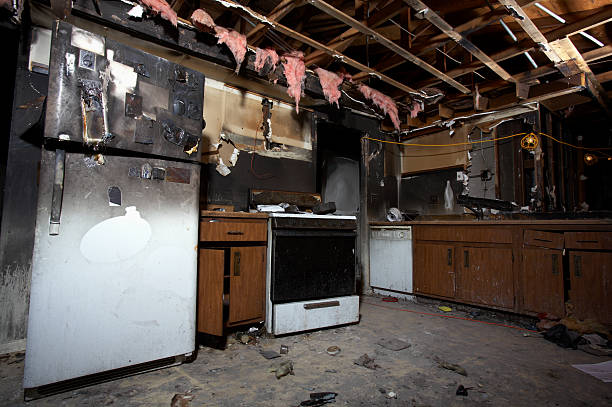
The 72-hour window after a fire determines whether porous materials stain permanently, whether acidic soot begins corroding your home's metal systems, and whether your family can safely return. Act now to stop the damage timeline before it advances further.
📞 Call +1-866-484-1409 NowEvery response begins with air quality readings to determine whether the property is safe for occupancy. We do not clear families to return until the data supports it.
Porous materials absorb smoke residue deeply within 72 hours. Our rapid response team treats surfaces within that window to prevent permanent discoloration and absorption.
Soot from synthetic material fires is chemically acidic. Left untreated, it corrodes copper wiring, metalwork, and electronic components within days. We neutralize it before that process compounds.
Our certified technicians conduct post-treatment air quality testing and issue occupant re-entry clearance documentation, giving your family confidence that the air is safe to breathe.
Most homeowners believe that once a fire is out and the visible flames are gone, the damage has stopped. Smoke damage does not work that way. The chemical processes that destroy surfaces, corrode materials, and harm indoor air quality continue for days and weeks after the fire itself is extinguished. Understanding that timeline is the difference between preserving a home and watching it deteriorate from the inside out.
The 72-hour rule is the most important concept in smoke damage mitigation. Porous materials, including drywall, wood framing, upholstered furniture, carpets, and clothing, begin absorbing smoke residue at the molecular level within hours of exposure. For the first few hours, surface cleaning can still recover most porous materials. By 24 hours, residue has begun to penetrate deeper into the material structure. By 72 hours, the absorption depth in many porous substrates has reached a threshold where surface cleaning alone is no longer sufficient and full material replacement becomes the only option. A treatment team that arrives in hour four faces a completely different scope of work than one that arrives on day four.
Acidic soot from synthetic material fires begins corroding copper wiring, stainless steel, and electronic circuit boards within 24 to 48 hours of initial exposure. This secondary exposure risk is separate from the fire damage itself and can total tens of thousands of dollars in equipment replacement if not addressed promptly.
Volatile organic compounds, commonly called VOCs, are released into the air during and after a fire from burning synthetic materials including plastics, foam, treated fabrics, and carpeting. These compounds do not disappear when you open a window. In an enclosed home, VOC concentrations can remain at levels that cause respiratory irritation, headaches, and more serious symptoms for days after the fire. Families that attempt to return to a smoke-damaged home before professional air treatment and testing expose themselves to this secondary exposure risk without realizing it. The smell of smoke is not the only indicator of airborne risk. Some of the most harmful compounds are odorless at concentrations that still affect respiratory health.
One phenomenon that surprises many homeowners is smoke residue reactivation. A home treated in a dry period may appear fully remediated. Then, months later when seasonal humidity rises, residents notice the smoke odor returning. This happens because residual smoke compounds absorbed into wall cavities, insulation, and subflooring are water-reactive. Elevated humidity causes them to off-gas again, releasing the same compounds that were present immediately after the fire. This is not a sign that the original treatment failed; it is a sign that the treatment did not go deep enough. Professional remediation addresses wall cavities, subfloor assemblies, and concealed framing spaces, not just visible surfaces, specifically to prevent this reactivation cycle.
The acidic chemistry of soot deserves particular attention for homes that contain electronics, appliances, and metalwork. Soot from fires involving synthetic materials has a pH that falls in the range capable of corroding copper, aluminum, and steel. This corrosion is not immediately visible. A circuit board that looks intact after smoke exposure may fail within weeks as the acidic residue on its contacts continues to react with the metal. Appliances, HVAC components, wiring junctions, and plumbing connections are all at risk. Our team applies neutralizing agents to exposed metal systems as a standard part of every smoke damage response, not as an optional add-on, because the cost of allowing that corrosion to proceed is almost always higher than the cost of preventing it.
Occupant re-entry clearance is the formal step that ends the remediation process. After surface treatment, deep extraction, and neutralization are complete, our certified technicians conduct air quality testing that measures particulate matter, VOC concentrations, and specific combustion byproducts. A clearance certificate documents that the indoor air quality has returned to an acceptable standard for human occupancy. This certificate matters for insurance purposes, for tenant or family peace of mind, and for the legal record if future health concerns arise. We do not issue clearance documentation without data that supports it.
Time-critical treatment at every stage of the damage timeline.
Within hours of your call, our Blue Bell response team begins treating exposed surfaces before the 72-hour absorption threshold is crossed. Fast action on walls, ceilings, and floors is what keeps porous materials recoverable rather than requiring full replacement.
View DetailsWe apply pH-balancing treatments to soot-affected surfaces and metal systems throughout your property. Neutralizing the acidic chemistry of smoke residue stops corrosion before it spreads to wiring, plumbing connections, and appliance components that may appear undamaged but are at risk.
View DetailsElectronics, HVAC systems, and exposed metalwork receive dedicated treatment to halt acidic soot corrosion. We inspect and treat circuit panels, appliance housings, copper plumbing, and HVAC components to protect against the delayed failures that smoke-exposed systems develop over the weeks following a fire.
View DetailsSurfaces that absorbed residue beyond the threshold for topical cleaning receive deep extraction treatment that draws residue out of the material structure. We also address wall cavities, subfloor spaces, and insulation where residue accumulates and causes the odor reactivation cycles that return months after a surface-only treatment.
View DetailsAfter all treatment phases are complete, we conduct certified air quality testing and issue a formal occupant re-entry clearance document. This certificate measures particulate levels, VOC concentrations, and specific combustion byproducts against established safety standards so your family's return is backed by data, not guesswork.
View DetailsOur team arrives and immediately takes baseline air quality measurements to determine indoor VOC concentrations, particulate levels, and occupancy safety. This data guides the treatment plan and establishes a before-treatment benchmark for the final clearance comparison.
All accessible surfaces receive treatment within the critical window. Priority goes to porous materials at risk of deep absorption and metal systems at risk of acidic corrosion. We document the condition of every treated area before and after to support your insurance documentation.
Wall cavities, subfloor assemblies, and insulation layers receive deep extraction treatment. Soot-exposed metal systems, electronics, and HVAC components are treated with neutralizing agents. This phase addresses the hidden residue that causes odor reactivation months after treatment and the corrosion that causes delayed equipment failures.
Post-treatment air quality testing measures results against occupancy safety standards. When readings confirm the indoor environment meets those standards, we issue a formal re-entry clearance certificate. Your family moves back in with documentation that the air quality has been verified by a certified professional, not just declared safe by the same team who did the work.
"My daughter has asthma and I was terrified about the air quality after the kitchen fire. The team took air readings on arrival and kept me informed throughout the process. Getting the re-entry clearance certificate meant I had actual proof the air was safe before I let her come home. That certificate was worth more to me than anything."
"I had two laptops and a home theater setup in the room affected by smoke. I thought they were destroyed. The team explained the acidic soot issue, treated the electronics housing and surroundings immediately, and both laptops came through without issues. Saving that equipment alone more than covered the cost of calling them."
"We tried to handle the smoke smell ourselves after a small fire. Six months later the smell came back every summer. When we finally called a certified team, they explained the reactivation issue and treated areas behind the drywall we had never thought of. That fixed a problem we had been living with for almost a year."
The 72-hour window is closing. Contact Protect Fire Tail in Blue Bell for immediate response and time-critical smoke damage treatment before permanent staining and corrosion take hold.